

My Father's Diary
Babamın Günlüğü
Babasıyla hiçbir zaman yakın olamamış, onu hep soğuk ve mesafeli bulmuş bir adam, babasının vefatından sonra eski bir günlük bulur. Günlüğü okudukça, suskun babasının aslında onu ne kadar çok sevdiğini, her başarısıyla gizlice gurur duyduğunu ve göstermekte zorlandığı derin bir sevgiyle dolu olduğunu keşfeder. Geç gelen bir anlayış, onu kendi oğluyla ilişkisini değiştirmeye yöneltir.
Altı noktalı kelimelere dokun, anlamı çıksın.
Tarık had always had a difficult with his father. His father, Mehmet, was a quiet, serious man who showed his feelings. When Tarık was a child, his father never said "I love you" or "I am proud of you." He used to work long hours and come home tired, with little energy for conversation. Tarık grew up believing that his father simply did not care about him.
Tarık'ın babasıyla her zaman zor bir ilişkisi olmuştu. Babası Mehmet, duygularını nadiren gösteren sessiz, ciddi bir adamdı. Tarık çocukken babası hiç "Seni seviyorum" ya da "Seninle gurur duyuyorum" demedi. Uzun saatler çalışır ve yorgun eve gelirdi, sohbet için az enerjisi olurdu. Tarık, babasının onu umursamadığına inanarak büyüdü.
As the years passed, the between them grew. Tarık moved to another city, started his own family, and visited his parents only a few times a year. Their phone calls were short and polite. They talked about the weather and the news, but never about anything deep. Tarık often felt a quiet sadness about this, but he did not know how to change it.
Yıllar geçtikçe aralarındaki mesafe büyüdü. Tarık başka bir şehre taşındı, kendi ailesini kurdu ve anne babasını yılda sadece birkaç kez ziyaret etti. Telefon görüşmeleri kısa ve kibardı. Hava durumu ve haberler hakkında konuşurlardı ama hiç derin bir şey hakkında değil. Tarık bu konuda sık sık sessiz bir hüzün hissederdi ama bunu nasıl değiştireceğini bilmiyordu.
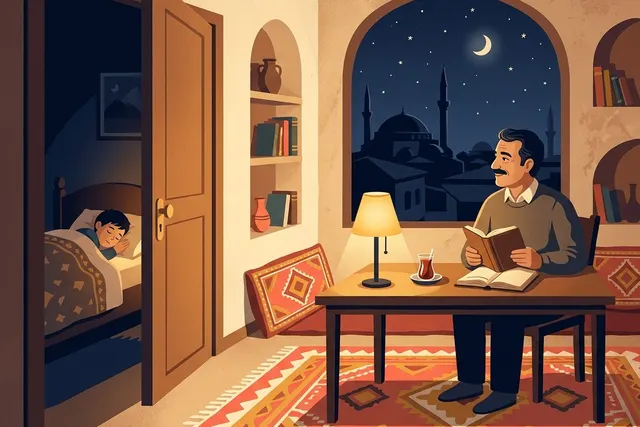
Then, one autumn, his father passed away suddenly. Tarık returned to his childhood home in Konya for the funeral. After the difficult days were over, he stayed to help his mother sort through his father's . In the bottom drawer of an old wooden desk, under some papers, he found a small, worn notebook. It was his father's private .
Sonra, bir sonbahar, babası aniden vefat etti. Tarık cenaze için Konya'daki çocukluk evine döndü. Zor günler bitince annesine babasının eşyalarını toplamakta yardım etmek için kaldı. Eski ahşap bir masanın en alt çekmecesinde, bazı kâğıtların altında, küçük, yıpranmış bir defter buldu. Bu babasının özel günlüğüydü.
Tarık had never known that his father kept a diary. He sat down on the floor and began to read. The first entries were from many years ago, when Tarık was still a small boy. What he read completely changed his understanding of the quiet man he had thought he knew. The diary was full of love — a deep, powerful love that his father had never been able to say out loud.
Tarık babasının günlük tuttuğunu hiç bilmiyordu. Yere oturdu ve okumaya başladı. İlk kayıtlar yıllar öncesine, Tarık'ın hâlâ küçük bir çocuk olduğu zamana aitti. Okuduğu şey, tanıdığını sandığı sessiz adam hakkındaki anlayışını tamamen değiştirdi. Günlük sevgiyle doluydu — babasının hiçbir zaman yüksek sesle söyleyemediği derin, güçlü bir sevgi.
"Today Tarık took his first steps," one early said. "My heart was so full that I had to leave the room so nobody would see me cry." Tarık stared at the words. He had always believed his father was cold. But here, in these private pages, was a man with emotion — a man who had simply never learned how to it.
"Bugün Tarık ilk adımlarını attı," diyordu ilk kayıtlardan biri. "Kalbim o kadar doluydu ki, kimse ağladığımı görmesin diye odadan çıkmak zorunda kaldım." Tarık kelimelere baktı. Her zaman babasının soğuk olduğuna inanmıştı. Ama burada, bu özel sayfalarda, duygularla taşan bir adam vardı — bunu nasıl ifade edeceğini hiçbir zaman öğrenememiş bir adam.
He kept reading, page after page. His father had written about every important moment of Tarık's life. He had recorded his son's school successes, his graduation, his wedding, and the birth of his children. After each event, he had written how proud he felt. "I wish I could tell him how much he means to me," one page said, "but the words always get stuck in my throat."
Sayfa sayfa okumaya devam etti. Babası Tarık'ın hayatının her önemli anını yazmıştı. Oğlunun okul başarılarını, mezuniyetini, düğününü ve çocuklarının doğumunu kaydetmişti. Her olaydan sonra ne kadar gurur duyduğunu yazmıştı. "Keşke ona benim için ne kadar değerli olduğunu söyleyebilsem," diyordu bir sayfa, "ama kelimeler hep boğazıma takılıyor."
Tarık read until the early hours of the morning, with tears running down his face. He realized that he had spent his whole life his father. The love he had always wanted had been there all along, hidden in a drawer, written in careful handwriting. His father had not been cold; he had just been unable to speak the language of feelings.
Tarık sabahın erken saatlerine kadar, yüzünden yaşlar akarak okudu. Hayatı boyunca babasını yanlış anladığını fark etti. Her zaman istediği sevgi, aslında hep oradaydı — bir çekmecede saklı, özenli bir el yazısıyla yazılmıştı. Babası soğuk değildi; sadece duygu dilini konuşamıyordu.
The diary changed something deep inside Tarık. He thought about his own son, who was now a teenager. "Have I become like my father?" he wondered. "Have I forgotten to say the words that matter?" He realized that he, too, often to express his love. He did not want his son to find out how he felt only from a diary, many years too late.
Günlük Tarık'ın içinde derin bir şeyi değiştirdi. Artık ergen olan kendi oğlunu düşündü. "Babam gibi mi oldum?" diye merak etti. "Önemli olan kelimeleri söylemeyi unuttum mu?" Kendisinin de sevgisini ifade etmekte sık sık zorlandığını fark etti. Oğlunun ne hissettiğini yıllar çok geç geçtikten sonra sadece bir günlükten öğrenmesini istemiyordu.
When Tarık returned home, he did something he had never done before. He sat down with his son, put his hand on his shoulder, and said simply, "I love you, and I am proud of you. I don't say it enough, but it is true." His son was surprised, but he smiled a wide, happy smile. It was a small moment, but it meant everything.
Tarık eve döndüğünde daha önce hiç yapmadığı bir şey yaptı. Oğluyla oturdu, elini omzuna koydu ve basitçe şöyle dedi: "Seni seviyorum ve seninle gurur duyuyorum. Bunu yeterince söylemiyorum ama bu gerçek." Oğlu şaşırdı ama geniş, mutlu bir gülümsemeyle güldü. Küçük bir andı ama her şey demekti.
Tarık keeps his father's diary on his own desk now. Sometimes he reads a page, and he feels close to the man he lost. He has forgiven his father, and more importantly, he has understood him. And he has made a quiet promise to himself: in his own family, the words of love will never again stay unspoken.
Tarık artık babasının günlüğünü kendi masasında tutuyor. Bazen bir sayfa okuyor ve kaybettiği adama yakın hissediyor. Babasını affetti ve daha da önemlisi onu anladı. Ve kendine sessiz bir söz verdi: kendi ailesinde, sevgi sözcükleri bir daha asla söylenmeden kalmayacak.

Kelimeler
Hikayedeki 11 yeni kelime, hikayeden örnek cümleleriyle.
Tarık had always had a difficult relationship with his father.
...a quiet man who rarely showed his feelings.
...the distance between them grew.
...sort through his father's belongings.
It was his father's private diary.
...one early entry said.
...a man overflowing with emotion.
...never learned how to express it.
...he had spent his whole life misunderstanding his father.
...he often struggled to express his love.
He has forgiven his father.
Gramer notu
Used to ve past perfect'e giriş (had + 3. hal)
Bu hikayede used to ve past perfect (had + fiilin 3. hali) öne çıkıyor.
- used to: He used to work long hours. (Eskiden uzun saatler çalışırdı.)
- Past perfect, "geçmişten daha önce" olan işler içindir. Hikaye geçmişte (past simple), ama ondan önce olan bir şey past perfect ile anlatılır:
- The love he had always wanted had been there. (Her zaman istediği sevgi hep oradaydı.)
- His father had written about every moment. (Babası her anı yazmıştı — okumasından önce.)
Ne kadar anladın?
6 kısa soru. Cevabını seç, hemen doğrusunu gör.