


The Clockmaker's Apprentice
Saatçinin Çırağı
Kapalıçarşı'da yaşlı bir saatçinin yanında çalışan genç bir çırak olan Tolga, modern dünyada eski bir mesleği öğrenmenin anlamsız olduğunu düşünür. Ama yaşlı usta ona, bir saati tamir etmenin aslında sabrı, zamanı ve hayatı anlamak olduğunu öğretir.
Altı noktalı kelimelere dokun, anlamı çıksın.
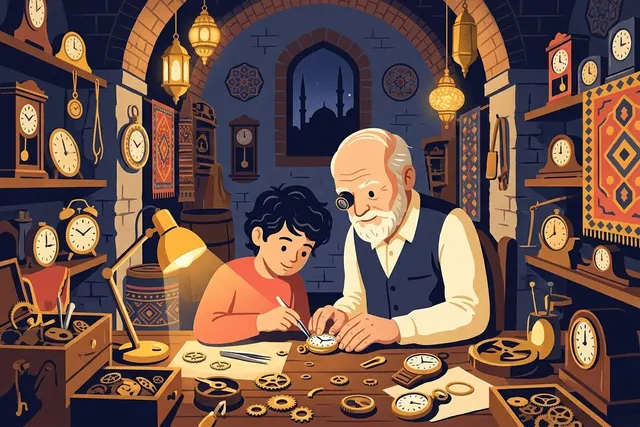
Tolga is nineteen years old. He works as an to an old named Üstat Vedat. Their small shop is in the Grand Bazaar in İstanbul. The shop is full of clocks — old clocks, new clocks, big clocks, and small clocks. They all together, filling the room with a gentle, steady sound.
Tolga on dokuz yaşındadır. Üstat Vedat adında yaşlı bir saatçinin yanında çırak olarak çalışır. Küçük dükkânları İstanbul'daki Kapalıçarşı'dadır. Dükkân saatlerle doludur — eski saatler, yeni saatler, büyük saatler ve küçük saatler. Hepsi birlikte tıklar ve odayı nazik, düzenli bir sesle doldurur.
At first, Tolga did not want this job. His friends work with computers and modern technology. "Nobody repairs clocks anymore," he used to think. "Everyone uses their phone to check the time. This is a dying . I am wasting my youth in this dusty old shop." He was often bored and .
İlk başta Tolga bu işi istememişti. Arkadaşları bilgisayarlar ve modern teknolojiyle çalışır. "Artık kimse saat tamir etmiyor," diye düşünürdü. "Herkes saate bakmak için telefonunu kullanıyor. Bu ölmekte olan bir meslek. Gençliğimi bu tozlu, eski dükkânda ziyan ediyorum." Sık sık sıkılır ve sabırsızlanırdı.
Üstat Vedat is a patient and wise man. He has repaired clocks for over fifty years. His hands move slowly and carefully. He notices that Tolga is not happy. One day, he gives Tolga a very old, broken pocket watch. "This watch has not worked for a hundred years," he says. "Your job is to bring it back to life. Take your time."
Üstat Vedat sabırlı ve bilge bir adamdır. Elli yıldan fazla süredir saat tamir etmiştir. Elleri yavaş ve dikkatli hareket eder. Tolga'nın mutlu olmadığını fark eder. Bir gün Tolga'ya çok eski, bozuk bir cep saati verir. "Bu saat yüz yıldır çalışmıyor," der. "Senin işin onu hayata döndürmek. Acele etme."
Tolga opens the watch. Inside, there are hundreds of tiny parts — tiny wheels, tiny , tiny screws. It looks impossible. "How can I fix this?" he complains. "There are too many pieces." Üstat Vedat smiles. "Do not look at all the pieces at once," he says. "Look at one piece. Understand it. Then move to the next. That is the secret of everything in life."
Tolga saati açar. İçinde yüzlerce minik parça vardır — minik çarklar, minik yaylar, minik vidalar. İmkânsız görünür. "Bunu nasıl tamir ederim?" diye yakınır. "Çok fazla parça var." Üstat Vedat gülümser. "Bütün parçalara aynı anda bakma," der. "Bir parçaya bak. Onu anla. Sonra bir sonrakine geç. Hayattaki her şeyin sırrı budur."
So Tolga begins. Slowly, he learns about each part. He cleans them one by one. He learns how the small wheels turn the hands. He learns how the spring gives the watch its energy. It is difficult work, and it requires great patience. Tolga makes many mistakes, but each day he understands a little more.
Böylece Tolga başlar. Yavaşça her parçayı öğrenir. Onları tek tek temizler. Küçük çarkların akrep ve yelkovanı nasıl döndürdüğünü öğrenir. Yayın saate enerjisini nasıl verdiğini öğrenir. Zor bir iştir ve büyük sabır gerektirir. Tolga birçok hata yapar ama her gün biraz daha fazla anlar.
Something strange begins to happen. As Tolga works, he becomes calmer. The quiet, careful work changes him. He used to be impatient and always in a hurry. But now he learns to slow down. He learns to . He learns to enjoy the small details. The dusty old shop no longer feels like a prison; it feels like a place of peace.
Tuhaf bir şey olmaya başlar. Tolga çalıştıkça daha sakin olur. Sessiz, dikkatli iş onu değiştirir. Eskiden sabırsızdı ve her zaman aceleciydi. Ama şimdi yavaşlamayı öğrenir. Odaklanmayı öğrenir. Küçük ayrıntıların tadını çıkarmayı öğrenir. Tozlu, eski dükkân artık bir hapishane gibi hissettirmez; bir huzur yeri gibi hissettirir.
Weeks pass. Finally, one afternoon, Tolga finishes the pocket watch. He the spring carefully. He holds his breath. And then — tick, tick, tick. The old watch, which has been silent for a hundred years, starts to work again. The hands begin to move. Tolga stares at it, . "It is alive," he whispers. "I brought it back to life."
Haftalar geçer. Sonunda bir öğleden sonra Tolga cep saatini bitirir. Yayı dikkatlice kurar. Nefesini tutar. Ve sonra — tik, tik, tik. Yüz yıldır sessiz olan eski saat yeniden çalışmaya başlar. Akrep ve yelkovan hareket etmeye başlar. Tolga hayretle ona bakar. "Yaşıyor," diye fısıldar. "Onu hayata döndürdüm."
Üstat Vedat comes to look. He smiles proudly. "You see?" he says. "You did not just repair a watch. You learned patience. You learned to time. In this fast modern world, everyone is in a hurry. But you — you have learned to slow down and to do a thing well. That is a rare and skill."
Üstat Vedat bakmaya gelir. Gururla gülümser. "Gördün mü?" der. "Sen sadece bir saat tamir etmedin. Sabrı öğrendin. Zamana saygı duymayı öğrendin. Bu hızlı modern dünyada herkes acele içinde. Ama sen — sen yavaşlamayı ve bir şeyi iyi yapmayı öğrendin. Bu nadir ve değerli bir beceri."
Tolga looks at the old master with new respect. He understands now. The job is not about clocks. It is about a way of living. "I used to think this profession was useless," he says. "But now I see its value. You repair time itself, Üstat. And you have repaired something in me too."
Tolga yaşlı ustaya yeni bir saygıyla bakar. Artık anlar. İş saatlerle ilgili değildir. Bir yaşam biçimiyle ilgilidir. "Eskiden bu mesleğin işe yaramaz olduğunu düşünürdüm," der. "Ama şimdi değerini görüyorum. Sen zamanın kendisini tamir ediyorsun, Üstat. Ve bende de bir şeyi tamir ettin."
Today, Tolga is a master clockmaker himself. He has his own small shop in the Grand Bazaar. He teaches young apprentices, just as Üstat Vedat taught him. "Learn patience," he tells them. "Do one thing at a time, and do it well. A clock teaches you the most important lesson of all: time is precious, so do not waste it." And the gentle ticking fills his shop, just like before.
Bugün Tolga kendisi usta bir saatçidir. Kapalıçarşı'da kendi küçük dükkânı vardır. Üstat Vedat'ın ona öğrettiği gibi genç çıraklara öğretir. "Sabrı öğrenin," der onlara. "Bir seferde bir şey yapın ve iyi yapın. Bir saat size her şeyin en önemli dersini öğretir: zaman değerlidir, o yüzden onu ziyan etmeyin." Ve nazik tıklama, tıpkı eskisi gibi dükkânını doldurur.

Kelimeler
Hikayedeki 11 yeni kelime, hikayeden örnek cümleleriyle.
He works as an apprentice.
an old clockmaker named Üstat Vedat.
They all tick together.
This is a dying profession.
He used to be impatient.
how the spring gives the watch its energy.
He learns to focus.
He winds the spring carefully.
Tolga stares at it, amazed.
You learned to respect time.
a rare and precious skill.
Gramer notu
Used to ve present perfect
Bu hikayede used to ve present perfect öne çıkıyor.
- used to (eskiden — artık değil): "Nobody repairs clocks anymore," he used to think. / He used to be impatient.
- Present perfect: He has repaired clocks for over fifty years. / the watch, which has been silent for a hundred years. / you have learned to slow down.
- Dikkat: "used to" geçmişteki alışkanlık/durum, artık geçerli değil.
Ne kadar anladın?
6 kısa soru. Cevabını seç, hemen doğrusunu gör.