

A Plateau Festival in the Black Sea
Karadeniz'de Yayla Şenliği
Genç bir şehirlinin, büyükannesinin köyündeki geleneksel yayla şenliğine katılarak yaşadığı kültürel keşif.
Altı noktalı kelimelere dokun, anlamı çıksın.
Bora has lived in Istanbul his whole life, but every summer, his grandmother invites him to her village in Rize for the traditional festival. This year, for the first time, he has finally decided to go.
Bora hayatı boyunca İstanbul'da yaşadı, ama her yaz büyükannesi onu Rize'deki köyünde düzenlenen geleneksel yayla şenliğine davet ediyor. Bu yıl ilk kez gitmeye karar verdi.
His grandmother used to describe the festival with so much excitement that Bora always imagined it as a magical, faraway event. Now that he is finally here, he realizes the reality is even more colorful than her stories.
Büyükannesi şenliği o kadar heyecanla anlatırdı ki Bora onu her zaman büyülü, uzak bir olay olarak hayal ederdi. Şimdi sonunda burada olunca, gerçekliğin hikayelerinden bile daha renkli olduğunu fark ediyor.
The journey up to the plateau takes almost three hours by car, along narrow mountain roads surrounded by green hills and fog. Bora has never seen like this before, and he keeps taking photos out of the window.
Yaylaya çıkış, yeşil tepeler ve sisle çevrili dar dağ yollarında araçla neredeyse üç saat sürüyor. Bora daha önce hiç böyle bir manzara görmemişti ve sürekli pencereden fotoğraf çekiyor.
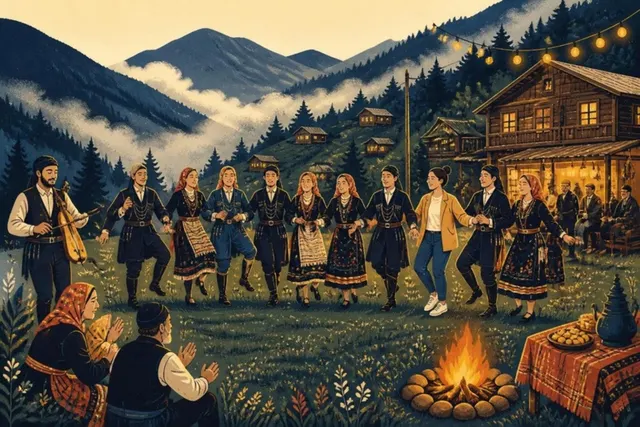
When they arrive, the plateau is full of people wearing traditional clothes, dancing to the sound of the bagpipe called "tulum." Bora's grandmother explains that people have celebrated this festival every summer for .
Vardıklarında yayla, geleneksel kıyafetler giyip "tulum" denen gaydanın sesine dans eden insanlarla doludur. Büyükannesi insanların nesillerdir her yaz bu şenliği kutladığını açıklar.
An elderly man teaches Bora a traditional dance called "horon." At first, Bora feels because he doesn't know the steps, but everyone encourages him kindly, and soon he is dancing along with the crowd.
Yaşlı bir adam Bora'ya "horon" denen geleneksel bir dansı öğretir. İlk başta adımları bilmediği için Bora utanır, ama herkes onu nazikçe teşvik eder ve kısa sürede kalabalıkla birlikte dans etmeye başlar.
Later, Bora's grandmother introduces him to distant relatives he has never met before. They cook fresh corn and local cheese over an open fire, and everyone shares food , as if they were one big family.
Sonra büyükannesi onu daha önce hiç tanışmadığı uzak akrabalarla tanıştırır. Açık ateşte taze mısır ve yöresel peynir pişirirler ve herkes sanki tek bir büyük aileymiş gibi yemeği cömertçe paylaşır.
As the sun sets, an old woman sings a mani, a traditional Black Sea , and everyone joins in, even though Bora doesn't know the words. If he comes back next year, he thinks, he will already know the songs .
Güneş batarken yaşlı bir kadın Karadeniz'e özgü geleneksel bir halk şarkısı olan mani söyler ve sözleri bilmese de herkes ona katılır. Gelecek yıl geri gelirse, diye düşünür, şarkıları ezbere bilecektir.
Before they leave, Bora's grandmother tells him that fewer young people come to the festival every year, since many have moved to big cities. She hopes that if more young people like Bora keep visiting, the tradition will for future generations.
Ayrılmadan önce büyükannesi ona her yıl daha az genç insanın şenliğe geldiğini, çünkü birçoğunun büyük şehirlere taşındığını söyler. Bora gibi daha fazla genç insan gelmeye devam ederse, geleneğin gelecek nesiller için hayatta kalacağını umuyor.
On the drive back to Istanbul, Bora already misses the plateau. He has decided that he will return every summer from now on, not just for his grandmother, but because he has finally understood what she always tried to explain to him.
İstanbul'a dönüş yolunda Bora yaylayı şimdiden özlüyor. Sadece büyükannesi için değil, ona her zaman anlatmaya çalıştığı şeyi sonunda anladığı için de bundan sonra her yaz geri döneceğine karar verdi.

Kelimeler
Hikayedeki 8 yeni kelime, hikayeden örnek cümleleriyle.
Every summer, she invites him to the plateau festival.
People have celebrated this every summer for generations.
Bora feels embarrassed at first.
Everyone shares food generously.
An old woman sings a traditional folk song.
He will know the songs by heart.
The tradition will survive for future generations.
Bora has never seen scenery like this before.
Gramer notu
Present perfect, will, first conditional ve used to
Present perfect, geçmişten bugüne uzanan durumları anlatır: "Bora has lived in Istanbul his whole life." First conditional: "If he comes back next year, he will already know the songs by heart." "Used to" eski bir alışkanlığı anlatır: "His grandmother used to describe the festival with so much excitement."
Ne kadar anladın?
6 kısa soru. Cevabını seç, hemen doğrusunu gör.