


A Journalist's Last Interview
Bir Gazetecinin Son Röportajı
Emekliliğe ayrılmak üzere olan deneyimli bir gazetecinin, kariyerini şekillendiren son röportajı.
Altı noktalı kelimelere dokun, anlamı çıksın.
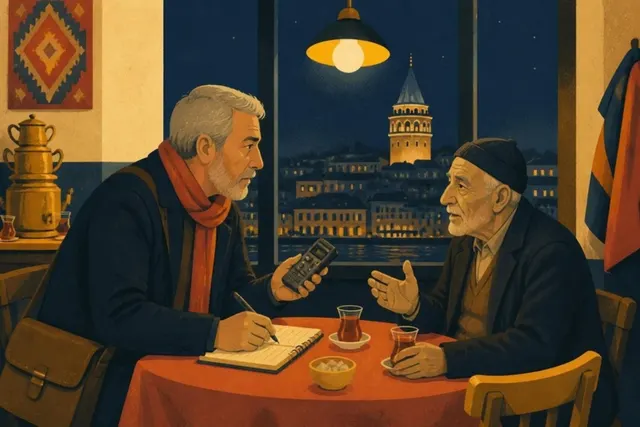
After thirty-two years working as a journalist for one of Istanbul's most respected newspapers, Ferhat had been given the choice of which story he wanted to cover for his final assignment before retirement. Rather than choosing something or politically significant, he requested to interview an elderly shoe-shiner named Nazım, who had worked on the same corner in Beyoğlu for over fifty years.
Ferhat's editor had been surprised by the request, since Ferhat had spent his career interviewing politicians, business leaders, and internationally recognized figures. When asked why he had chosen such a seemingly ordinary subject, Ferhat explained that Nazım had actually been the very first person he had ever interviewed, back when he was a nervous, inexperienced young reporter fresh out of university.
That first interview, conducted more than three decades earlier, had never actually been published. Ferhat's original editor at the time had rejected the piece, telling him that nobody would be interested in reading about a shoe-shiner's daily routine. If that editor had approved the story back then, Ferhat later admitted, his entire career might have taken a completely different direction from the very beginning.
Despite the rejection, Ferhat had never forgotten the conversation he'd had with Nazım that day, nor the quiet with which the older man had spoken about his work. He had often thought about returning to interview him again someday, but somehow, thirty years had passed without him ever making the time.
When Ferhat finally returned to the same corner, he was relieved to find that Nazım, now in his eighties, was still working there, though his hands moved more slowly than they used to. Nazım didn't recognize Ferhat at first, but once reminded of their earlier meeting, his face lit up with recognition.
During their conversation, Nazım revealed that he had shined the shoes of countless notable people over the decades, including politicians, actors, and even a former president, though he had always been too to mention any names publicly. He was quoted as saying that everyone who sat in his chair, regardless of their status, became equal for those few minutes.
Ferhat asked Nazım whether he had ever considered retiring. Nazım replied that if he stopped working, he wasn't sure what he would do with himself, since this corner and this routine had essentially become his entire identity over half a century. He said that being forgotten frightened him far more than physical exhaustion ever could.
This time, Ferhat made sure the story would be published exactly as he had originally intended it, without unnecessary editing or . He wanted readers to understand that extraordinary stories didn't require famous subjects, only careful attention and genuine curiosity about the people who are usually .
The article was published on Ferhat's final day at the newspaper and received an unexpectedly enormous response from readers, many of whom said it had reminded them of their own city's workers, people they passed every day without ever really seeing. Several readers even visited Nazım's corner afterward simply to meet him in person.
At his retirement gathering that evening, colleagues asked Ferhat what he had learned after thirty-two years in journalism. He replied that if he had understood earlier in his career what he now understood, he would have written fewer stories about powerful people and many more about ordinary ones, because it was in those overlooked corners of the city that the truest stories had always been waiting to be told.

Kelimeler
Hikayedeki 6 yeni kelime, hikayeden örnek cümleleriyle.
Something prestigious or politically significant.
The quiet dignity with which he spoke.
He had always been too discreet.
Without unnecessary editing or exaggeration.
People who are usually overlooked.
The city's invisible workers.
Gramer notu
Past perfect, passive voice, third conditional ve reported speech
Past perfect, otuz yıl önceki olayları anlatır: "That first interview had never actually been published." Passive voice: "Ferhat had been given the choice of which story to cover." Third conditional: "If that editor had approved the story back then, his entire career might have taken a different direction." Reported speech: "He said that being forgotten frightened him far more than physical exhaustion ever could."
Ne kadar anladın?
6 kısa soru. Cevabını seç, hemen doğrusunu gör.