

The Exchange House
Mübadele Evi
Ayvalık'ta eski bir taş evi satın alan genç mimar Defne, tadilat sırasında duvarın içinde saklı bir sandık bulur. İçinde, 1923 mübadelesinde evi terk etmek zorunda kalan bir Rum ailenin fotoğrafları ve mektupları vardır. Defne, bu ailenin torunlarını bulmaya karar verir ve bir asır önce kapanan bir hikâyeyi beklenmedik bir şekilde tamamlar.
Altı noktalı kelimelere dokun, anlamı çıksın.
Defne was a young who loved old buildings. She bought an old stone house in Ayvalık, a beautiful coastal town. The house was more than a hundred years old, and it needed a lot of repairs. Defne planned to it carefully, keeping its original character. She loved the thick stone walls, the high ceilings, and the sense of history in every room.
Defne eski binaları seven genç bir mimardı. Güzel bir sahil kasabası olan Ayvalık'ta eski bir taş ev satın aldı. Ev yüz yıldan fazla eskiydi ve çok tamir gerektiriyordu. Defne onu, orijinal karakterini koruyarak dikkatlice restore etmeyi planladı. Kalın taş duvarları, yüksek tavanları ve her odadaki tarih hissini seviyordu.
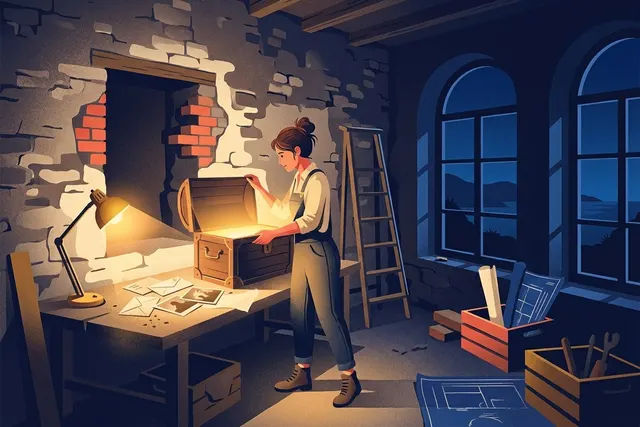
During the , the workers had to open one of the old walls. Behind the stones, they found something unexpected: a small, space, and inside it, an old metal box. It had been hidden there for a very long time. The workers called Defne. Carefully, she opened the box. Her hands were shaking a little. What could be inside, after all these years?
Tadilat sırasında işçiler eski duvarlardan birini açmak zorunda kaldı. Taşların arkasında beklenmedik bir şey buldular: küçük, saklı bir alan ve içinde eski bir metal kutu. Çok uzun süredir orada saklanmıştı. İşçiler Defne'yi çağırdı. Dikkatlice kutuyu açtı. Elleri biraz titriyordu. Bunca yıldan sonra içinde ne olabilirdi?
Inside the box, Defne found old photographs, letters, and a few small personal items. The photographs showed a family — a mother, a father, and three children — standing in front of the very same house. The letters were written in Greek. Defne did not understand them, but she understood something important: this house had once belonged to a Greek family.
Kutunun içinde Defne eski fotoğraflar, mektuplar ve birkaç küçük kişisel eşya buldu. Fotoğraflar bir aileyi gösteriyordu — bir anne, bir baba ve üç çocuk — tam da aynı evin önünde duruyorlardı. Mektuplar Yunanca yazılmıştı. Defne onları anlamadı ama önemli bir şeyi anladı: bu ev bir zamanlar bir Rum ailesine aitti.
Defne knew the history. In 1923, after the war, there had been a great between Turkey and Greece. Millions of people had been to leave their homes. Greek families who had lived in Anatolia for generations had to move to Greece. And Turkish families from Greece had to move to Turkey. It was a painful time. People left behind their homes, their friends, and their whole lives.
Defne tarihi biliyordu. 1923'te, savaştan sonra, Türkiye ile Yunanistan arasında büyük bir nüfus mübadelesi olmuştu. Milyonlarca insan evlerini terk etmeye zorlanmıştı. Nesillerce Anadolu'da yaşamış Rum aileleri Yunanistan'a taşınmak zorunda kalmıştı. Ve Yunanistan'dan Türk aileleri Türkiye'ye taşınmak zorunda kalmıştı. Acı verici bir zamandı. İnsanlar evlerini, arkadaşlarını ve bütün hayatlarını geride bıraktı.
Defne realized what the box was. Before this Greek family had left their home forever, they had hidden these precious things inside the wall. Maybe they had hoped to return one day. Maybe they just could not to throw their memories away. For a hundred years, the box had waited silently inside the wall, holding the story of a family that had been forced to leave.
Defne kutunun ne olduğunu fark etti. Bu Rum ailesi evlerini sonsuza dek terk etmeden önce, bu değerli şeyleri duvarın içine saklamışlardı. Belki bir gün dönmeyi ummuşlardı. Belki sadece anılarını atmaya dayanamamışlardı. Yüz yıl boyunca kutu duvarın içinde sessizce beklemişti, terk etmeye zorlanmış bir ailenin hikayesini tutarak.
Defne was deeply moved. She felt that these things did not really belong to her. They belonged to the family who had hidden them. "I have to find them," she decided. "Or at least their grandchildren. This box is their family history. They should have it." She knew it would be difficult — the family had left a hundred years ago, and they were somewhere in Greece. But she had to try.
Defne derinden etkilendi. Bu şeylerin aslında kendisine ait olmadığını hissetti. Onları saklayan aileye aittiler. "Onları bulmalıyım," diye karar verdi. "Ya da en azından torunlarını. Bu kutu onların aile tarihi. Ona sahip olmalılar." Zor olacağını biliyordu — aile yüz yıl önce ayrılmıştı ve Yunanistan'da bir yerdeydiler. Ama denemesi gerekiyordu.
Defne found a translator for the Greek letters. The letters contained the family's name and the name of the village in Greece where they had been sent. With this information, Defne began a long search. She used the internet and social media. She contacted historical societies in both Turkey and Greece. For months, she looked for any of the family. Many times, she almost gave up.
Defne Yunanca mektuplar için bir çevirmen buldu. Mektuplar ailenin adını ve gönderildikleri Yunanistan'daki köyün adını içeriyordu. Bu bilgiyle Defne uzun bir aramaya başladı. İnterneti ve sosyal medyayı kullandı. Hem Türkiye'deki hem de Yunanistan'daki tarih derneklerine ulaştı. Aylarca ailenin herhangi bir izini aradı. Birçok kez neredeyse pes etti.
Finally, Defne's search succeeded. She found the grandchildren of the Greek family, who were now living in a town in northern Greece. She contacted them and told them the whole story. At first, they could not believe it. Their grandparents had often talked about the house in Ayvalık that they had lost. For the family, it had become a kind of legend — a lost home from a painful past.
Sonunda Defne'nin araması başarılı oldu. Şimdi kuzey Yunanistan'da bir kasabada yaşayan Rum ailesinin torunlarını buldu. Onlarla iletişime geçti ve bütün hikayeyi anlattı. İlk başta inanamadılar. Büyükanne ve büyükbabaları, kaybettikleri Ayvalık'taki evden sık sık söz etmişti. Aile için bir tür efsane olmuştu — acı verici bir geçmişten kayıp bir yuva.
A few months later, the Greek grandchildren came to Ayvalık. Defne welcomed them into the old house — the house of their . It was an emotional moment. They walked through the rooms where their grandparents had lived as children. Defne gave them the box with the photographs and letters. An old woman among them held the photographs and cried. "This is my grandmother," she said. "She never stopped missing this home."
Birkaç ay sonra Rum torunları Ayvalık'a geldi. Defne onları eski eve — atalarının evine — buyur etti. Duygusal bir andı. Büyükanne ve büyükbabalarının çocukken yaşadığı odalarda dolaştılar. Defne onlara fotoğrafların ve mektupların olduğu kutuyu verdi. Aralarındaki yaşlı bir kadın fotoğrafları tuttu ve ağladı. "Bu benim büyükannem," dedi. "Bu evi özlemeyi hiç bırakmadı."
The two families — the Greek grandchildren and Defne — became close friends. The painful history that had people a hundred years ago now brought them together in friendship. Defne had not just restored an old house. She had closed a circle that had been open for a century. "History is full of pain," she often says now. "But sometimes, we can a little piece of it, one family at a time."
İki aile — Rum torunları ve Defne — yakın dost oldu. Yüz yıl önce insanları ayıran acı verici tarih, şimdi onları dostlukla bir araya getirdi. Defne sadece eski bir evi restore etmemişti. Bir asırdır açık olan bir çemberi kapatmıştı. "Tarih acıyla dolu," diyor şimdi sık sık. "Ama bazen onun küçük bir parçasını, her seferinde bir aile, iyileştirebiliriz."

Kelimeler
Hikayedeki 11 yeni kelime, hikayeden örnek cümleleriyle.
Defne was a young architect.
During the renovation...
...a small, hidden space.
...to restore it carefully.
...a great population exchange.
...had been forced to leave their homes.
...could not bear to throw their memories away.
...any trace of the family.
...the house of their ancestors.
...that had separated people.
...we can heal a little piece of it.
Gramer notu
Past perfect ve passive voice
Bu hikayede past perfect ve passive voice öne çıkıyor.
- Past perfect (geçmişten önceki geçmiş): It had been hidden there for a long time. / this house had once belonged to a Greek family. / Greek families who had lived in Anatolia.
- Passive voice: The letters were written in Greek. / Millions of people had been forced to leave. / a circle that had been open for a century.
- Dikkat: "had been + 3. hal" hem pasif hem geçmiş-öncesi anlamı birlikte verir.
Ne kadar anladın?
6 kısa soru. Cevabını seç, hemen doğrusunu gör.