

They Taught a Computer to Read Ottoman
Bir Bilgisayara Osmanlıca Okumayı Öğrettiler
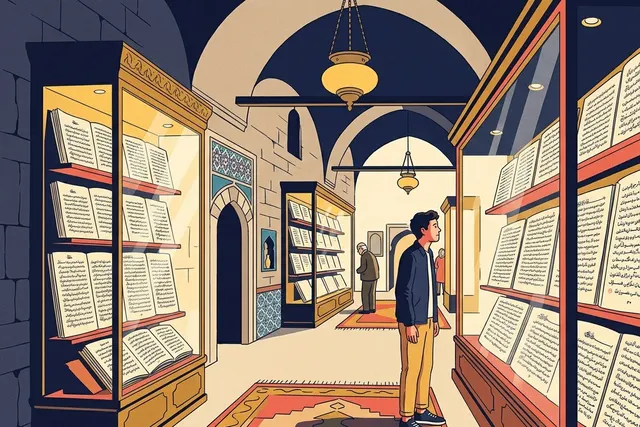
On sekiz yaşındaki yazılım öğrencisi Berk, yerel bir kültür tarihi müzesini ziyaret ederken, cam vitrinlerde saklanan binlerce benzersiz el yazması Osmanlı eseri fark etti.
Altı noktalı kelimelere dokun, anlamı çıksın.
While visiting a local cultural history museum, eighteen-year-old software student Berk noticed thousands of unique handwritten Ottoman stored inside glass cases. Because very few experts can read the intricate calligraphic scripts fluidly, the profound historical knowledge locked within these archives remained completely inaccessible to the global public.
On sekiz yaşındaki yazılım öğrencisi Berk, yerel bir kültür tarihi müzesini ziyaret ederken, cam vitrinlerde saklanan binlerce benzersiz el yazması Osmanlı eseri fark etti. Çok az sayıdaki çağdaş uzman bu karmaşık hat yazılarını akıcı bir şekilde okuyabildiğinden, bu arşivlerde kilitli kalan derin tarihi bilgiler küresel kamuoyu için tamamen erişilemez durumdaydı.
Inspired to build an intellectual bridge between cultural heritage and digital automation, Berk gathered an interdisciplinary team consisting of paleography students and programming enthusiasts. Together, they launched a complex global project: developing a deep learning artificial intelligence algorithm specialized in optical character recognition for ancient handwritten scripts.
Kültürel miras ile dijital otomasyon arasında entelektüel bir köprü kurmak isteyen Berk, paleografi (eski yazı bilimi) öğrencileri ve programlama meraklılarından oluşan disiplinler arası bir ekip topladı. Birlikte karmaşık bir küresel proje başlattılar: Antik el yazması metinler için optik karakter tanıma konusunda uzmanlaşmış derin öğrenmeli bir yapay zeka algoritması geliştirmek.
The paramount technical hurdle was training the network to the fluid, interconnected layout of Ottoman text lines, which entirely lacked standardized printing structures. They hand-labeled over ten thousand individual words from historical files, creating a massive data matrix that taught the software to identify letters based on geometric variables and historical contextual parameters.
En önemli teknik engel, sinir ağını (neural network), standart basılı yapılardan tamamen yoksun olan Osmanlıca metin satırlarının akıcı ve birbirine bağlı düzenini çözmek için eğitmekti. Tarihi dosyalardan on binden fazla kelimeyi elle etiketleyerek, yazılıma harfleri geometrik değişkenlere ve tarihi bağlamsal parametrelere dayanarak tanımlamayı öğreten devasa bir veri matrisi oluşturdular.
After months of configuration inside their garage laboratory, they finalized their model, named 'Arşiv-AI'. When they scanned a faded, three-hundred-year-old military script from the late Ottoman period, the computer processed the calligraphic visual layers and generated an instant, high-fidelity translation in both modern Turkish and English with ninety-five percent precision.
Garaj laboratuvarlarında aylarca süren yapılandırma tekrarlarından sonra, 'Arşiv-AI' adını verdikleri modellerini tamamladılar. Osmanlı döneminin sonlarına ait solmuş, üç yüz yıllık askeri bir belgeyi taradıklarında, bilgisayar hattatlık görsel katmanlarını işledi ve yüzde doksan beş kesinlikle hem modern Türkçe hem de İngilizceye anında, yüksek kalitede bir çeviri üretti.
Their innovative project generated massive waves of enthusiasm among international historians, unlocking deep social research paths across global university libraries. Berk and his collaborative team proved that advanced artificial intelligence shouldn't be used merely to replace human activities; instead, it can be harnessed to the undying voice of past civilizations, ensuring ancient wisdom speaks directly to the future.
Yenilikçi projeleri, uluslararası tarihçiler arasında büyük bir coğrafi heyecan dalgası yaratarak küresel üniversite kütüphanelerinde derin sosyal araştırma yollarının kilidini açtı. Berk ve ortaklaşa çalışan ekibi, gelişmiş yapay zekanın sadece insani faaliyetlerin yerini almak için kullanılmaması gerektiğini; aksine, geçmiş medeniyetlerin ölmeyen sesini korumak ve kadim bilgeliğin doğrudan geleceğe konuşmasını sağlamak için kullanılabileceğini kanıtladı.

Kelimeler
Hikayedeki 6 yeni kelime, hikayeden örnek cümleleriyle.
The museum archives preserve fragile medieval manuscripts under customized temperature controls.
The art gallery displays a diverse collection of contemporary paintings by modern artists.
The computer scientists successfully used automation software to decipher the ancient stone code.
Advanced search engines utilize deep neural networks to prioritize informative content pages.
The application software went through ten engineering iterations to repair the layout bugs.
Environmental laws are structured to preserve endangered animal species in the national forests.
Ne kadar anladın?
4 kısa soru. Cevabını seç, hemen doğrusunu gör.