

The Last Tailor
Son Terzi
İzmir'de küçük bir terzi dükkânı işleten yaşlı Hasan Usta, mesleğinin yok olmasından endişe etmektedir. Yırtık bir okul çantasını tamir ettirmeye gelen genç Elif ile tanışır ve ona zanaatını öğretir. Bu süreçte hem dükkân hem de iki insanın hayatı yeniden canlanır.
Altı noktalı kelimelere dokun, anlamı çıksın.
Mr. Hasan had a small shop in a quiet street in Izmir. He opened it forty years ago, and he still opened it every morning at eight o'clock. The shop was old and narrow, but it smelled of fresh cloth and warm tea. Everyone in the knew him.
Hasan Usta'nın İzmir'de sessiz bir sokakta küçük bir terzi dükkânı vardı. Dükkânı kırk yıl önce açmıştı ve hâlâ her sabah saat sekizde açıyordu. Dükkân eski ve dardı ama taze kumaş ve sıcak çay kokuyordu. Mahalledeki herkes onu tanırdı.
These days, however, very few came. People bought cheap clothes from big shopping centres. "If I had more customers, I would an assistant," Hasan often said to himself. "If someone learned this work from me, the shop would not die." But no young person wanted to be a tailor.
Ancak bu günlerde çok az müşteri geliyordu. İnsanlar büyük alışveriş merkezlerinden ucuz kıyafetler alıyordu. "Daha çok müşterim olsa bir yardımcı tutardım," diye kendi kendine söylerdi Hasan sık sık. "Biri bu işi benden öğrense dükkân ölmezdi." Ama hiçbir genç terzi olmak istemiyordu.
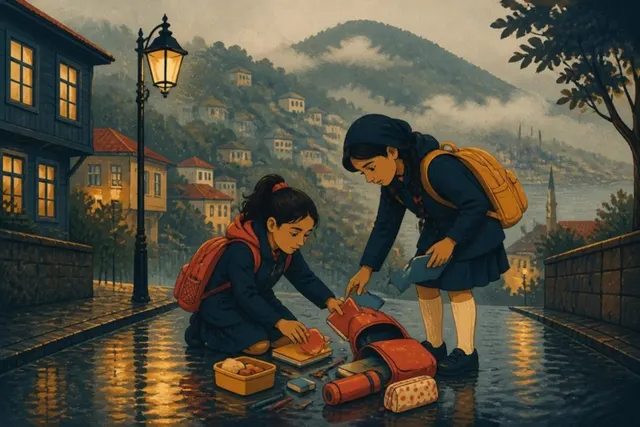
One rainy Tuesday, a teenage girl came in with a school bag. Her name was Elif. She was fifteen years old. "Can you fix it?" she asked. "My mother says we can't buy a new one." Hasan smiled and took the bag. "Come back in an hour," he said. "And please, sit down and have some tea."
Yağmurlu bir salı günü, yırtık bir okul çantasıyla genç bir kız içeri girdi. Adı Elif'ti. On beş yaşındaydı. "Tamir edebilir misiniz?" diye sordu. "Annem yenisini alamayacağımızı söylüyor." Hasan gülümseyip çantayı aldı. "Bir saat sonra gel," dedi. "Ve lütfen otur, biraz çay iç."
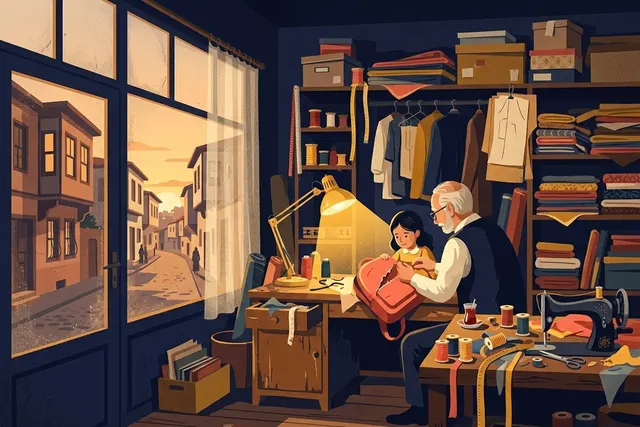
Elif did not leave. She watched Hasan's hands move quickly and carefully over the cloth. "How do you do that?" she asked. "It looks like magic." "It is only ," said Hasan. "If I showed you, would you try?" Elif's eyes opened wide. "Yes, of course!"
Elif gitmedi. Hasan'ın ellerinin kumaşın üzerinde hızlı ve dikkatli hareket edişini izledi. "Bunu nasıl yapıyorsunuz?" diye sordu. "Büyü gibi görünüyor." "Sadece sabır," dedi Hasan. "Sana gösterseydim, dener miydin?" Elif'in gözleri kocaman açıldı. "Evet, tabii ki!"
She came every day after school. First she learned to a needle. Then she learned to sew a straight line. Her were crooked at the beginning, and sometimes she wanted to . "If I were you, I would not worry," Hasan said. "My first stitches were much worse."
Her gün okuldan sonra geldi. Önce iğneye iplik geçirmeyi öğrendi. Sonra düz dikiş atmayı öğrendi. Başlangıçta dikişleri eğri büğrüydü ve bazen vazgeçmek istiyordu. "Yerinde olsam endişelenmezdim," dedi Hasan. "Benim ilk dikişlerim çok daha kötüydü."
Months passed. One day Elif made a small blue jacket for her little brother. Hasan checked every seam slowly. His eyes became wet. "If my own master were alive, he would be of you," he said quietly. "And so am I."
Aylar geçti. Bir gün Elif küçük kardeşi için küçük mavi bir ceket dikti. Hasan her dikişi yavaşça kontrol etti. Gözleri doldu. "Kendi ustam hayatta olsa seninle gurur duyardı," dedi sessizce. "Ben de öyleyim."
News of the girl and the old tailor spread through the neighbourhood. Neighbours brought coats to fix, curtains to shorten, and wedding dresses to adjust. The shop was full again. Elif's friends came to watch, and two of them asked to learn.
Kız ve yaşlı terzinin haberi mahallede yayıldı. Komşular tamir edilecek paltolar, kısaltılacak perdeler ve düzeltilecek gelinlikler getirdi. Dükkân yeniden doluydu. Elif'in arkadaşları izlemeye geldi ve onlardan ikisi öğrenmek istedi.
Years later, Elif opened her own small studio next to the old shop. Above the door she hung a sign: "Hasan & Elif — Tailors." Hasan, now very old, still sat by the window every morning with his tea. "If that girl did not come every day, this old man would be very lonely," he laughed.
Yıllar sonra Elif, eski dükkânın yanında kendi küçük atölyesini açtı. Kapının üstüne bir tabela astı: "Hasan & Elif — Terziler." Artık çok yaşlı olan Hasan hâlâ her sabah çayıyla pencerenin yanında oturuyordu. "O kız her gün gelmeseydi, bu ihtiyar çok yalnız olurdu," diye güldü.
Hasan understood something important. A does not die when it is shared. It dies only when nobody wants to learn it, or when nobody wants to teach it.
Hasan önemli bir şeyi anlamıştı. Bir zanaat paylaşıldığında ölmez. Ancak kimse onu öğrenmek istemediğinde ya da kimse onu öğretmek istemediğinde ölür.

Kelimeler
Hikayedeki 11 yeni kelime, hikayeden örnek cümleleriyle.
Mr. Hasan had a small tailor shop...
Everyone in the neighbourhood knew him.
...very few customers came.
...I would hire an assistant.
...came in with a torn school bag.
It is only patience.
First she learned to thread a needle.
Her stitches were crooked...
...sometimes she wanted to give up.
...he would be proud of you.
A craft does not die when it is shared.
Gramer notu
Second conditional (If + past simple, would + yalın fiil)
Bu hikayede second conditional öne çıkıyor. Gerçek olmayan veya şu an için pek mümkün görünmeyen durumları anlatır.
- Yapı: If + past simple, would + yalın fiil
- If I had more customers, I would hire an assistant. (Daha çok müşterim olsa bir yardımcı tutardım.)
- If someone learned this work from me, the shop would not die. (Biri bu işi benden öğrense dükkân ölmezdi.)
- Tavsiye vermek için If I were you, I would... kalıbı kullanılır:
- If I were you, I would not worry. (Yerinde olsam endişelenmezdim.)
- "If" cümlesinde was yerine were kullanımı (If I were, If he were) yaygındır ve daha doğrudur.
- Zaman olarak geçmiş görünür ama anlam olarak şimdiki zaman veya gelecekle ilgilidir.
Ne kadar anladın?
6 kısa soru. Cevabını seç, hemen doğrusunu gör.