

The Archaeologist
Arkeolog
Göbeklitepe'de çalışan genç arkeolog Elif, on iki bin yıllık bir taş sütunun üzerindeki oymayı temizlerken, onu yapan insana dair derin bir bağ hisseder. Kazı sürecinde hem bilimsel bir keşif yaşar hem de zamanın, insanlığın ve kalıcılığın anlamı üzerine düşünür. Modern dünyanın hızına kapılmış biri olarak, geçmişin ona öğrettiklerini sorgular.
Altı noktalı kelimelere dokun, anlamı çıksın.
The sun had barely risen over the hills of Şanlıurfa when Elif climbed the wooden path toward the site. At this hour, before the heat became unbearable and before the tourists arrived, Göbeklitepe belonged only to the archaeologists and to the silence. Elif had worked here for three summers now, but the feeling of had never faded.
Elif kazı alanına doğru ahşap yolu tırmandığında, güneş Şanlıurfa'nın tepelerinin üzerinde henüz yeni doğmuştu. Bu saatte, sıcak dayanılmaz hâle gelmeden ve turistler gelmeden önce, Göbeklitepe yalnızca arkeologlara ve sessizliğe aitti. Elif üç yazdır burada çalışıyordu ama hayranlık hissi hiç kaybolmamıştı.
Göbeklitepe is often called the oldest temple in the world. It was built around twelve thousand years ago — thousands of years before the pyramids of Egypt, before writing, before the wheel. The great stone , some of them five metres tall, had been and raised by people who had no metal tools. For most of human history, the site had been buried and forgotten beneath the earth.
Göbeklitepe sıklıkla dünyanın en eski tapınağı olarak anılır. Yaklaşık on iki bin yıl önce inşa edildi — Mısır piramitlerinden, yazıdan, tekerlekten binlerce yıl önce. Bazıları beş metre boyunda olan büyük taş sütunlar, hiç metal aleti olmayan insanlar tarafından oyulmuş ve dikilmişti. İnsanlık tarihinin çoğunda, bu alan toprağın altında gömülü ve unutulmuş kalmıştı.
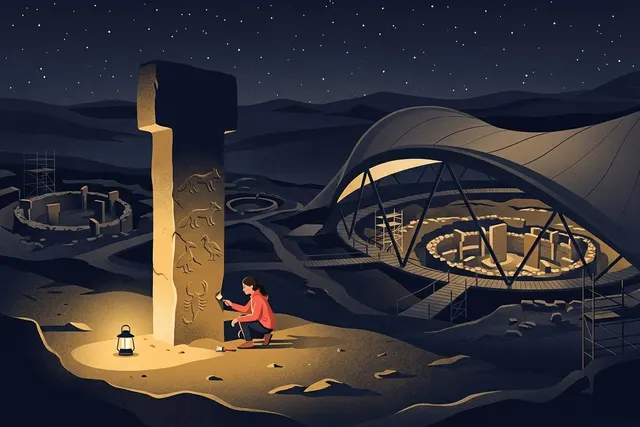
That morning, Elif was given a delicate task. A section of a pillar had recently been uncovered, and the fine soil needed to be cleaned away by hand. She knelt down, took her small brush, and began to work slowly. With each careful movement, more of the ancient surface was . Gradually, a carving appeared beneath the dust: the figure of a fox, cut into the stone with skill.
O sabah Elif'e hassas bir görev verildi. Bir sütunun bir bölümü kısa süre önce ortaya çıkarılmıştı ve ince toprağın elle temizlenmesi gerekiyordu. Diz çöktü, küçük fırçasını aldı ve yavaşça çalışmaya başladı. Her dikkatli hareketle, antik yüzeyin daha fazlası ortaya çıktı. Yavaş yavaş tozun altında bir oyma belirdi: olağanüstü bir ustalıkla taşa işlenmiş bir tilki figürü.
Elif stopped and stared at the carving. Her heart was beating faster. Twelve thousand years ago, a human being had sat in this exact spot and carved this fox. That person had felt the same sun on their back, had held a tool in their hand, and had created something beautiful. If the carving had not been protected by the soil, it would have been destroyed long ago. But here it was, perfectly , waiting for her.
Elif durdu ve oymaya baktı. Kalbi daha hızlı atıyordu. On iki bin yıl önce bir insan tam bu noktada oturmuş ve bu tilkiyi oymuştu. O kişi sırtında aynı güneşi hissetmiş, elinde bir alet tutmuş ve güzel bir şey yaratmıştı. Oyma toprak tarafından korunmamış olsaydı, çok uzun zaman önce yok olmuş olurdu. Ama işte buradaydı, kusursuz korunmuş, onu bekliyordu.
A strange emotion came over her. She felt as if the distance between herself and that ancient artist had suddenly disappeared. They would never know each other's names, and they were separated by an unimaginable gulf of time. And yet, in that moment, they were connected by the same simple human : to make something that would last, to leave a mark that said *I was here*.
Tuhaf bir duygu kapladı onu. Kendisiyle o antik sanatçı arasındaki mesafenin birden kaybolduğunu hissetti. Birbirlerinin adını asla bilemeyeceklerdi ve hayal edilemez bir zaman uçurumuyla ayrılmışlardı. Yine de o anda, aynı basit insani dürtüyle bağlıydılar: kalıcı bir şey yapmak, "Ben buradaydım" diyen bir iz bırakmak.
Later that day, the discovery was photographed, measured, and carefully recorded by the team. The lead professor was delighted. "This is why we do this work," he told the younger members. "Every object that is found here rewrites a little piece of our shared history. We used to believe that temples came after farming and cities. Göbeklitepe has taught us that perhaps belief came first."
O günün ilerleyen saatlerinde keşif ekip tarafından fotoğraflandı, ölçüldü ve dikkatlice kaydedildi. Baş profesör çok memnundu. "Bu işi bunun için yapıyoruz," dedi genç üyelere. "Burada bulunan her nesne ortak tarihimizin küçük bir parçasını yeniden yazıyor. Eskiden tapınakların tarım ve şehirlerden sonra geldiğine inanırdık. Göbeklitepe bize belki de inancın önce geldiğini öğretti."
That evening, Elif sat alone on a hill, watching the sunset spread orange across the ancient landscape. She thought about her life back in the city — the endless notifications, the rush of deadlines, the way everyone seemed to be in a hurry to nowhere. If those ancient people could see us now, she wondered, what would they think of our , forgetful age?
O akşam Elif bir tepede tek başına oturdu, gün batımının antik manzaraya turuncu yayılmasını izledi. Şehirdeki hayatını düşündü — bitmek bilmeyen bildirimler, son teslim tarihlerinin telaşı, herkesin hiçbir yere varmak için acele ediyor gibi görünmesi. O antik insanlar bizi şimdi görebilselerdi, diye merak etti, huzursuz, unutkan çağımız hakkında ne düşünürlerdi?
She realised that the people who had built Göbeklitepe had understood something that modern society often forgets. They had not built for themselves alone; they had built for those who would come after them. They had thought in terms of centuries, not seconds. If we lived with that same long view, Elif thought, perhaps we would treat the earth, and each other, with far greater care.
Göbeklitepe'yi inşa eden insanların, modern toplumun sık sık unuttuğu bir şeyi anladığını fark etti. Sadece kendileri için inşa etmemişlerdi; kendilerinden sonra gelecekler için inşa etmişlerdi. Saniyeler değil, yüzyıllar ölçeğinde düşünmüşlerdi. Biz de aynı uzun bakışla yaşasaydık, diye düşündü Elif, belki dünyaya ve birbirimize çok daha büyük bir özenle davranırdık.
When the season ended, the newly discovered pillar was covered again with protective material, so that it would be preserved for future of scientists. Elif understood the logic, but a part of her felt sad to say goodbye to the fox she had uncovered with her own hands. "Don't worry," the professor said, when she told him how she felt. "It has waited twelve thousand years. It can wait a little longer."
Sezon bittiğinde, yeni keşfedilen sütun gelecek nesil bilim insanları için korunsun diye tekrar koruyucu malzemeyle örtüldü. Elif mantığını anlıyordu ama bir yanı, kendi elleriyle ortaya çıkardığı tilkiye veda etmekten üzgündü. "Merak etme," dedi profesör, ona nasıl hissettiğini anlattığında. "On iki bin yıl bekledi. Biraz daha bekleyebilir."
Elif returned to the city, but she was not quite the same person. She still checked her phone and still rushed to meet deadlines, but now, in the busiest moments, she would sometimes pause and remember the fox in the stone. She had been changed by a silent conversation across twelve thousand years — a reminder that the truly important things are the ones we build to ourselves.
Elif şehre döndü ama tam olarak aynı insan değildi. Hâlâ telefonunu kontrol ediyor, hâlâ son teslim tarihlerine yetişmek için acele ediyordu ama artık en yoğun anlarda bazen durup taştaki tilkiyi hatırlıyordu. On iki bin yıl boyunca süren sessiz bir sohbetle değişmişti — gerçekten önemli şeylerin, kendimizden daha uzun yaşasın diye inşa ettiklerimiz olduğunun bir hatırlatması.

Kelimeler
Hikayedeki 11 yeni kelime, hikayeden örnek cümleleriyle.
...the wooden path toward the excavation site.
...the feeling of awe had never faded.
The great stone pillars, some five metres tall...
...had been carved and raised by people...
...more of the ancient surface was revealed.
...perfectly preserved, waiting for her.
...the same simple human impulse.
...our restless, forgetful age.
...for future generations of scientists.
...the ones we build to outlast ourselves.
...cut into the stone with remarkable skill.
Gramer notu
Passive voice ve past perfect
Bu hikayede passive voice (edilgen çatı) ve past perfect öne çıkıyor.
- Passive: nesne öne çıkar, kim yaptığı önemsiz/belirsizdir. Yapı: be + fiilin 3. hali.
- The pillars had been carved and raised. (Sütunlar oyulmuş ve dikilmişti.)
- The discovery was photographed and recorded. (Keşif fotoğraflandı ve kaydedildi.)
- Past perfect: geçmişten önceki geçmiş. The site had been buried for most of human history. (Alan tarihin çoğunda gömülü kalmıştı.)
Ne kadar anladın?
6 kısa soru. Cevabını seç, hemen doğrusunu gör.