

The Architect's Bridge
Mimarın Köprüsü
Başarılı bir şehir mimarı olan Cem, memleketi olan ücra bir dağ köyünden gelen bir mektupla sarsılır: köyü vadinin iki yakasına bölen nehrin üzerindeki eski köprü yıkılmıştır ve çocuklar okula ulaşamamaktadır. Cem, prestijli projelerini bırakıp köye döner ve meslek hayatının en küçük ama en anlamlı projesini inşa eder.
Altı noktalı kelimelere dokun, anlamı çıksın.
Cem was one of the most respected in İstanbul. His designed enormous glass towers, luxury shopping centres, and impressive corporate . His buildings had won international prizes, and his name was well known in the world of architecture. By any measure, he had achieved everything he had once dreamed of as a poor boy from the mountains.
Cem, İstanbul'un en saygın mimarlarından biriydi. Firması devasa cam kuleler, lüks alışveriş merkezleri ve etkileyici şirket genel merkezleri tasarlıyordu. Binaları uluslararası ödüller kazanmıştı ve adı mimarlık dünyasında iyi tanınıyordu. Her ölçüye göre, dağlardan fakir bir çocukken bir zamanlar hayalini kurduğu her şeyi başarmıştı.
Cem had grown up in a small, village in the mountains of Artvin. He had left as a teenager to study, and he had rarely returned. The village had always seemed small and unimportant compared to the glamorous life he had built in the city. He sometimes felt a little guilty about this, but he was always too busy to think about it for long.
Cem, Artvin'in dağlarındaki küçük, ücra bir köyde büyümüştü. Okumak için ergenken ayrılmış ve nadiren geri dönmüştü. Köy, şehirde kurduğu göz alıcı hayatın yanında her zaman küçük ve önemsiz görünmüştü. Bu konuda bazen biraz suçlu hissederdi ama uzun süre düşünemeyecek kadar meşguldü hep.
One morning, a letter arrived at his office. It was from the teacher at his old village school. The letter explained that a disaster had happened. The village sat on both sides of a fast mountain river, and the two halves had been connected by an old wooden bridge for over a hundred years. That winter, the bridge had been destroyed by a . Now it was gone.
Bir sabah ofisine bir mektup geldi. Eski köy okulundaki öğretmendendi. Mektup bir felaketin yaşandığını açıklıyordu. Köy, hızlı akan bir dağ nehrinin iki yakasında yer alıyordu ve iki yarısı yüz yıldan fazla süredir eski bir ahşap köprüyle birbirine bağlıydı. O kış, köprü bir selde yıkılmıştı. Artık yoktu.
The were serious. The school was on one side of the river, but many families lived on the other side. Without the bridge, the children could not cross safely to reach the school. Some parents were sending their children on a dangerous two-hour walk around the mountain; others had simply stopped sending them at all. "The children's education has been ," the teacher wrote. "We do not know what to do. You are the only architect our village has ever produced. Can you help us?"
Sonuçları ciddiydi. Okul nehrin bir yakasındaydı ama birçok aile diğer yakada yaşıyordu. Köprü olmadan çocuklar okula ulaşmak için güvenle karşıya geçemiyordu. Bazı ebeveynler çocuklarını dağın etrafından tehlikeli, iki saatlik bir yürüyüşe gönderiyordu; diğerleri ise onları göndermeyi tamamen bırakmıştı. "Çocukların eğitimi kesintiye uğradı," diye yazdı öğretmen. "Ne yapacağımızı bilmiyoruz. Köyümüzün yetiştirdiği tek mimar sensin. Bize yardım edebilir misin?"
The letter affected Cem deeply. He thought about his own childhood. He remembered crossing that very bridge every morning to get to school. If that bridge had not existed when he was a boy, he would never have received an education. He would never have become an architect. Everything he had, he owed partly to that simple wooden .
Mektup Cem'i derinden etkiledi. Kendi çocukluğunu düşündü. Okula gitmek için her sabah tam da o köprüden geçtiğini hatırladı. O köprü çocukken var olmasaydı, hiçbir zaman eğitim alamazdı. Hiçbir zaman mimar olamazdı. Sahip olduğu her şeyi kısmen o basit ahşap yapıya borçluydu.
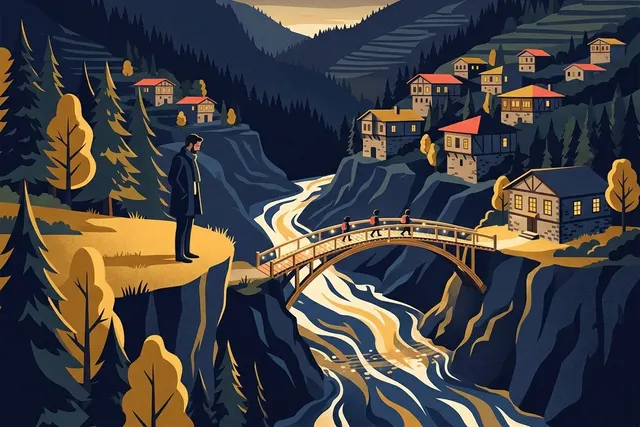
Cem made a decision that surprised his colleagues. He put his large, prestigious projects and travelled back to the village. When he arrived, he was shocked by how much the problem had affected the community. He stood by the rushing river and looked at the broken remains of the old bridge. "I will build a new one," he told the villagers. "A strong one, that will last for generations."
Cem meslektaşlarını şaşırtan bir karar verdi. Büyük, prestijli projelerini askıya aldı ve köye geri döndü. Vardığında, sorunun topluluğu ne kadar etkilediğini görünce şok oldu. Coşkun nehrin kenarında durdu ve eski köprünün kırık kalıntılarına baktı. "Yenisini yapacağım," dedi köylülere. "Nesiller boyu dayanacak güçlü bir köprü."
Building the bridge was not easy. It was, in many ways, the smallest project of Cem's career. There was little money, the location was difficult, and the materials had to be carried up the mountain. Cem designed it himself, carefully and with great love. He worked alongside the villagers, who helped with their own hands. For the first time in years, he was not sitting in an office; he was building something real.
Köprüyü inşa etmek kolay değildi. Birçok açıdan Cem'in kariyerinin en küçük projesiydi. Az para vardı, konum zordu ve malzemelerin dağa taşınması gerekiyordu. Cem onu kendisi tasarladı, dikkatlice ve büyük bir sevgiyle. Kendi elleriyle yardım eden köylülerle birlikte çalıştı. Yıllardır ilk kez bir ofiste oturmuyordu; gerçek bir şey inşa ediyordu.
After several months of hard work, the bridge was finished. It was not a glass tower or a famous building, but it was beautiful in its own simple, honest way. On the day it opened, the whole village came to celebrate. The children ran across it, laughing, on their way to school. Cem watched them, and he felt a happiness that none of his prizes had ever given him.
Aylarca süren zorlu çalışmanın ardından köprü bitti. Bir cam kule ya da ünlü bir bina değildi ama kendi basit, dürüst tarzında güzeldi. Açıldığı gün bütün köy kutlamak için geldi. Çocuklar okula giderken gülerek üzerinden koştu. Cem onları izledi ve ödüllerinin hiçbirinin ona vermediği bir mutluluk hissetti.
An old woman approached Cem at the celebration. She took his hand. "You know," she said, "if you had stayed in the city and ignored our letter, nobody would have you. You are an important man now. But you came back. You remembered where you came from. That is worth more than all your famous buildings." Cem could not speak; he simply nodded, with tears in his eyes.
Kutlamada yaşlı bir kadın Cem'e yaklaştı. Elini tuttu. "Biliyor musun," dedi, "şehirde kalsaydın ve mektubumuzu görmezden gelseydin, kimse seni suçlamazdı. Artık önemli bir adamsın. Ama geri döndün. Nereden geldiğini hatırladın. Bu, bütün ünlü binalarından daha değerli." Cem konuşamadı; sadece başını salladı, gözlerinde yaşlarla.
Cem returned to İstanbul and to his career, but he was a changed man. He had why he had become an architect in the first place — not for prizes or fame, but to create things that improve people's lives. From then on, his firm took on a special project every year: a school, a clinic, or a bridge for a community in need. The small bridge in Artvin, he always said, was the most important thing he had ever built.
Cem İstanbul'a ve kariyerine döndü ama değişmiş bir adamdı. En başta neden mimar olduğunu yeniden keşfetmişti — ödüller ya da şöhret için değil, insanların hayatını iyileştiren şeyler yaratmak için. O günden sonra firması her yıl özel bir proje üstlendi: ihtiyaç sahibi bir topluluk için bir okul, bir klinik ya da bir köprü. Artvin'deki küçük köprünün, inşa ettiği en önemli şey olduğunu hep söylerdi.

Kelimeler
Hikayedeki 11 yeni kelime, hikayeden örnek cümleleriyle.
Cem was one of the most respected architects.
His firm designed enormous glass towers.
...impressive corporate headquarters.
...a small, remote village.
...the bridge had been destroyed by a flood.
The consequences were serious.
The children's education has been interrupted.
...that simple wooden structure.
He put his projects on hold.
...nobody would have blamed you.
He had rediscovered why he had become an architect.
Gramer notu
Passive voice ve third conditional
Bu hikayede passive voice ve third conditional öne çıkıyor.
- Passive: the two halves had been connected by a bridge. / the bridge had been destroyed by a flood. / The children's education has been interrupted.
- Third conditional (geçmişte olmayanın hayali sonucu): If + had + 3. hal, ... would have + 3. hal.
- If that bridge had not existed, I would never have received an education. (O köprü olmasaydı, hiç eğitim alamazdım.)
- If you had stayed in the city, nobody would have blamed you.
Ne kadar anladın?
6 kısa soru. Cevabını seç, hemen doğrusunu gör.