

The Glassblower of Beykoz
Beykoz'un Cam Ustası
Beykoz'da nesillerdir süren geleneksel cam üfleme sanatının son ustası olan Reşat Usta, kimsenin bu zanaatı öğrenmek istememesinden endişelenir. Fabrika camı ucuzdur ve el yapımı cam ölmektedir. Ama ilgisiz görünen genç bir kadının dükkânına gelmesi, ölmekte olan bir sanata beklenmedik bir umut getirir.
Altı noktalı kelimelere dokun, anlamı çıksın.
Reşat Usta is the last traditional in Beykoz. For centuries, Beykoz had been famous for its beautiful handmade glass. The had been passed down from master to for over three hundred years. Reşat Usta had learned it from his father, who had learned it from his own father. Now, at seventy, he is the only one left.
Reşat Usta, Beykoz'daki son geleneksel cam ustasıdır. Yüzyıllar boyunca Beykoz güzel el yapımı camıyla ünlü olmuştu. Zanaat, üç yüz yıldan fazla süredir ustadan çırağa aktarılmıştı. Reşat Usta onu babasından öğrenmişti, o da kendi babasından öğrenmişti. Şimdi yetmiş yaşında, geriye kalan tek kişi odur.
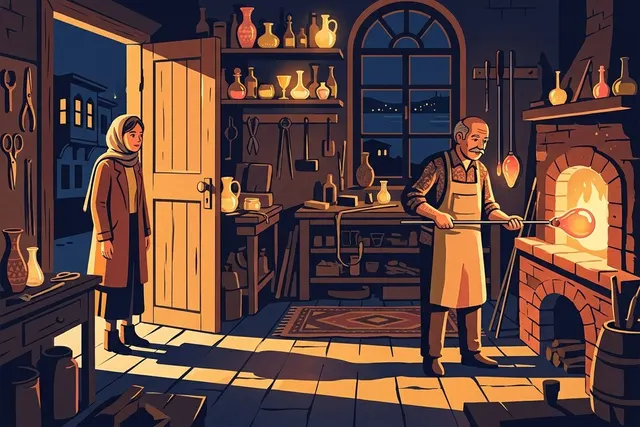
In his small workshop, Reşat Usta works with fire and breath. He heats the glass in a great oven until it orange and soft. Then he blows gently through a long metal pipe, and the glass into a beautiful shape. With his skilled hands, he creates vases, bowls, and lamps. Each piece is . No two are ever exactly the same.
Küçük atölyesinde Reşat Usta ateş ve nefesle çalışır. Camı büyük bir fırında turuncu ve yumuşak parlayana kadar ısıtır. Sonra uzun bir metal borudan nazikçe üfler ve cam güzel bir şekle doğru genişler. Becerikli elleriyle vazolar, kâseler ve lambalar yaratır. Her parça benzersizdir. Hiçbiri tam olarak birbirinin aynısı değildir.
But Reşat Usta is worried. The craft is dying. These days, glass is made cheaply in factories. Machines can make a thousand identical glasses in an hour. People do not want to pay more for handmade glass. "Why should they?" he thinks sadly. "The factory glass is cheaper. But it has no soul. Each piece I make is a piece of my heart."
Ama Reşat Usta endişelidir. Zanaat ölmektedir. Bu günlerde cam fabrikalarda ucuza yapılıyor. Makineler bir saatte bin tane aynı bardağı yapabiliyor. İnsanlar el yapımı cam için daha fazla ödemek istemiyor. "Neden ödesinler ki?" diye düşünür üzgünce. "Fabrika camı daha ucuz. Ama ruhu yok. Benim yaptığım her parça kalbimin bir parçası."
The biggest problem is that Reşat Usta has no apprentice. He had tried to teach young people many times, but nobody had stayed. The work is difficult and hot and poorly paid. "Young people want easy jobs in offices," he says. "They do not want to stand in front of a hot oven all day. When I die, this craft will die with me. Three hundred years of history will be lost forever."
En büyük sorun Reşat Usta'nın çırağının olmamasıdır. Gençlere birçok kez öğretmeye çalışmıştı ama kimse kalmamıştı. İş zor, sıcak ve az kazançlıdır. "Gençler ofislerde kolay işler istiyor," der. "Bütün gün sıcak bir fırının önünde durmak istemiyorlar. Ben öldüğümde bu zanaat benimle ölecek. Üç yüz yıllık tarih sonsuza dek kaybolacak."
One day, a young woman enters the workshop. Her name is İpek. She is an art student. At first, Reşat Usta thinks she is just a tourist. Many tourists come to watch and take photos, but they never want to learn. "Can I help you?" he asks, expecting her to ask for a photograph. But İpek surprises him. "I want to learn," she says. "I want to become your apprentice."
Bir gün genç bir kadın atölyeye girer. Adı İpek'tir. Bir sanat öğrencisidir. İlk başta Reşat Usta onu sadece bir turist sanır. Birçok turist izlemeye ve fotoğraf çekmeye gelir ama hiç öğrenmek istemezler. "Yardımcı olabilir miyim?" diye sorar, onun fotoğraf istemesini bekleyerek. Ama İpek onu şaşırtır. "Öğrenmek istiyorum," der. "Çırağınız olmak istiyorum."
Reşat Usta is . He has been disappointed before. "This work is very hard," he warns her. "It is hot and dangerous. You will burn your hands. You will earn little money. Many have started, but all of them have given up. Why do you want to do this?" İpek looks at a glass vase on the shelf. "Because this is beautiful," she says. "And beautiful things should not be allowed to die."
Reşat Usta temkinlidir. Daha önce hayal kırıklığına uğramıştır. "Bu iş çok zordur," diye uyarır onu. "Sıcak ve tehlikelidir. Ellerini yakacaksın. Az para kazanacaksın. Birçoğu başladı ama hepsi pes etti. Bunu neden yapmak istiyorsun?" İpek raftaki bir cam vazoya bakar. "Çünkü bu güzel," der. "Ve güzel şeylerin ölmesine izin verilmemeli."
İpek begins her training. It is exactly as hard as Reşat Usta promised. The heat is terrible. She burns her fingers. Her first attempts are and ugly. The glass breaks, or it takes a strange shape. Many times, she feels like giving up. But she does not. Every morning, she returns to the workshop, and slowly, day by day, her hands begin to learn.
İpek eğitimine başlar. Tam Reşat Usta'nın söz verdiği kadar zordur. Sıcaklık korkunçtur. Parmaklarını yakar. İlk denemeleri sakar ve çirkindir. Cam kırılır ya da tuhaf bir şekil alır. Birçok kez pes etmek ister. Ama pes etmez. Her sabah atölyeye döner ve yavaş yavaş, gün be gün, elleri öğrenmeye başlar.
Months pass. İpek improves. Then one day, she makes her first perfect vase. It is simple but beautiful. She holds it up to the light, and the colors shine. Reşat Usta takes it in his old hands and examines it carefully. For a long time, he says nothing. Then a tear runs down his cheek. "This," he says quietly, "is the work of a true glassblower. The craft will not die."
Aylar geçer. İpek gelişir. Sonra bir gün ilk mükemmel vazosunu yapar. Sade ama güzeldir. Onu ışığa tutar ve renkler parlar. Reşat Usta onu yaşlı elleriyle alır ve dikkatlice inceler. Uzun süre hiçbir şey söylemez. Sonra yanağından bir damla yaş süzülür. "Bu," der usulca, "gerçek bir cam ustasının eseri. Zanaat ölmeyecek."
İpek has a modern idea too. She photographs their beautiful glass and sells it online. She tells the story of the craft and its three-hundred-year history. People all over the world become interested. Orders begin to come in. The beautiful handmade glass, which had been forgotten, is discovered by a new . Suddenly, the dying craft has a future again.
İpek'in modern bir fikri de vardır. Güzel camlarını fotoğraflar ve internetten satar. Zanaatın ve üç yüz yıllık tarihinin hikâyesini anlatır. Dünyanın her yerinden insanlar ilgilenmeye başlar. Siparişler gelmeye başlar. Unutulmuş olan güzel el yapımı cam, yeni bir nesil tarafından keşfedilir. Birden, ölmekte olan zanaatın yeniden bir geleceği olur.
Today, Reşat Usta still works beside İpek in the workshop. He is teaching her everything he knows, and she is teaching him about the modern world. The ancient craft has been saved, but it has also been . "I was afraid that three hundred years would end with me," Reşat Usta often says. "But if İpek had not walked into my workshop that day, all of this would have been lost. Sometimes, hope comes when you least expect it."
Bugün Reşat Usta hâlâ atölyede İpek'in yanında çalışır. Ona bildiği her şeyi öğretmektedir ve o da ona modern dünyayı öğretmektedir. Kadim zanaat kurtarılmıştır ama aynı zamanda yenilenmiştir. "Üç yüz yılın benimle biteceğinden korkuyordum," der Reşat Usta sık sık. "Ama İpek o gün atölyeme girmeseydi bütün bunlar kaybolurdu. Bazen umut, en beklemediğin anda gelir."

Kelimeler
Hikayedeki 11 yeni kelime, hikayeden örnek cümleleriyle.
the last traditional glassblower.
The craft is dying.
had been passed down from master to apprentice.
Reşat Usta has no apprentice.
until it glows orange.
the glass expands.
Each piece is unique.
Reşat Usta is cautious.
Her first attempts are clumsy.
it has also been renewed.
discovered by a new generation.
Gramer notu
Passive voice ve past perfect
Bu hikayede passive voice ve past perfect öne çıkıyor.
- Passive voice: Glass is made cheaply in factories. / The craft had been passed down from master to apprentice. / The craft has been saved. / beautiful things should not be allowed to die.
- Past perfect: Beykoz had been famous. / He had learned it from his father. / all of them had given up.
- Third conditional: If İpek had not walked into my workshop, all of this would have been lost.
Ne kadar anladın?
6 kısa soru. Cevabını seç, hemen doğrusunu gör.