

The Clockmaker
Saat Ustası
İstanbul'un eski bir sokağında yıllardır mekanik saatler tamir eden yaşlı usta Vedat, kaybolmakta olan bir zanaatın son temsilcilerindendir. Kimse artık eski saatleri tamir ettirmek istemezken, teknolojiye düşkün genç bir kız dükkâna girer ve beklenmedik bir şekilde bu zanaata ilgi duyar. Usta, bilgisini aktaracak birini bulmanın umudunu yeniden kazanır.
Altı noktalı kelimelere dokun, anlamı çıksın.
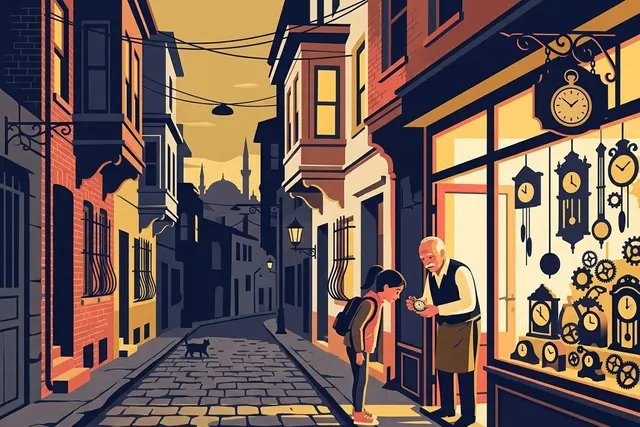
In a narrow street near Tünel, behind a dusty window full of old clocks, Vedat Usta had spent his entire working life repairing . He was now seventy-three years old, and his small shop looked almost exactly as it had when his own master had handed it to him half a century earlier. The air smelled of oil and brass, and the room was filled with the gentle, uneven ticking of a hundred different clocks.
Tünel yakınlarında dar bir sokakta, eski saatlerle dolu tozlu bir pencerenin ardında, Vedat Usta bütün çalışma hayatını saatleri tamir ederek geçirmişti. Artık yetmiş üç yaşındaydı ve küçük dükkânı, kendi ustasının yarım yüzyıl önce onu kendisine devrettiği zamankiyle neredeyse tıpatıp aynı görünüyordu. Hava yağ ve pirinç kokuyordu ve oda yüzlerce farklı saatin nazik, düzensiz tıkırtısıyla doluydu.
Vedat Usta's was a dying art. Once, repairing mechanical clocks and watches had been a respected profession, and skilled craftsmen had been all over the city. But the world had changed. These days, almost everyone checked the time on a phone, and broken watches were simply thrown away and replaced. Fewer and fewer people brought their old clocks to be , and no young person wanted to learn such a slow, difficult trade.
Vedat Usta'nın zanaatı ölmekte olan bir sanattı. Bir zamanlar mekanik saatleri tamir etmek saygın bir meslekti ve yetenekli ustalar şehrin her yerinde çok rağbet görürdü. Ama dünya değişmişti. Bu günlerde neredeyse herkes saate telefondan bakıyordu ve bozuk saatler basitçe atılıp yenisiyle değiştiriliyordu. Gittikçe daha az insan eski saatlerini tamir ettirmeye getiriyordu ve hiçbir genç böyle yavaş, zor bir zanaatı öğrenmek istemiyordu.
Despite all this, Vedat Usta refused to close his shop. Every morning, he unlocked the door, put on his old leather , and sat down at his workbench. He would take a broken mechanism in his wrinkled hands, place a to his eye, and lose himself completely in the tiny world of springs and . For him, each clock was not just a machine but a small living thing that deserved to be saved.
Bütün bunlara rağmen Vedat Usta dükkânını kapatmayı reddediyordu. Her sabah kapıyı açar, eski deri önlüğünü giyer ve tezgâhına otururdu. Kırışık ellerine bozuk bir mekanizma alır, gözüne bir büyüteç yerleştirir ve kendini tamamen yayların ve dişlilerin minik dünyasında kaybederdi. Onun için her saat sadece bir makine değil, kurtarılmayı hak eden küçük, canlı bir varlıktı.
Vedat Usta often worried about what would happen to his knowledge when he was gone. He had learned his craft over many years from a master who had learned it from his master before him. This chain of knowledge stretched back for generations. "If I cannot find someone to teach," he would say sadly to the few old friends who still visited, "then everything I know will simply disappear. A craft that took centuries to build will die with me."
Vedat Usta sık sık kendisi gittiğinde bilgisine ne olacağını merak ederdi. Zanaatını, ondan önce kendi ustasından öğrenmiş bir ustadan uzun yıllar boyunca öğrenmişti. Bu bilgi zinciri nesiller öncesine uzanıyordu. "Öğretecek birini bulamazsam," derdi hüzünle, hâlâ onu ziyaret eden birkaç eski arkadaşına, "o zaman bildiğim her şey basitçe yok olacak. Yüzyıllarca inşa edilen bir zanaat benimle birlikte ölecek."
One rainy afternoon, the little bell above the door rang, and a young woman walked in. She was perhaps twenty years old, dressed in modern clothes, with wireless earphones around her neck. Vedat Usta assumed she had come to the wrong address. But she approached the counter and placed an old, broken pocket watch in front of him. "This belonged to my grandfather," she said. "Everyone told me it couldn't be fixed. You are my last hope."
Yağmurlu bir öğleden sonra, kapının üstündeki küçük zil çaldı ve genç bir kadın içeri girdi. Belki yirmi yaşındaydı, modern giysiler giymişti, boynunda kablosuz kulaklıklar vardı. Vedat Usta yanlış adrese geldiğini sandı. Ama kız tezgâha yaklaştı ve önüne eski, bozuk bir cep saati koydu. "Bu dedeme aitti," dedi. "Herkes tamir edilemeyeceğini söyledi. Siz benim son umudumsunuz."
Vedat Usta examined the watch carefully. It was a fine old piece, and it had not been looked after well, but the damage could be repaired. As he worked, the young woman, whose name was Zeynep, watched with growing . She asked him question after question: how the tiny parts fitted together, how a spring could store energy, how something so small could measure something as vast as time. Her curiosity was genuine and deep.
Vedat Usta saati dikkatlice inceledi. Güzel, eski bir parçaydı ve iyi bakılmamıştı ama hasar tamir edilebilirdi. O çalışırken, adı Zeynep olan genç kadın artan bir hayranlıkla izledi. Ona soru üstüne soru sordu: minik parçaların nasıl bir araya geldiğini, bir yayın nasıl enerji depolayabildiğini, bu kadar küçük bir şeyin zaman kadar uçsuz bucaksız bir şeyi nasıl ölçebildiğini. Merakı gerçek ve derindi.
When Zeynep returned a week later to collect the repaired watch, she did not want to leave. She that she had not been able to stop thinking about the shop. She studied computer engineering at university, she explained, but she felt that something was missing in a world of screens and software. "If I could learn to do what you do," she said hesitantly, "I think I would be happier. Would you ever consider taking an ?"
Zeynep bir hafta sonra tamir edilmiş saati almaya geri döndüğünde gitmek istemedi. Dükkânı düşünmeyi bırakamadığını itiraf etti. Üniversitede bilgisayar mühendisliği okuduğunu ama ekranlar ve yazılım dünyasında bir şeylerin eksik olduğunu hissettiğini açıkladı. "Sizin yaptığınızı yapmayı öğrenebilseydim," dedi tereddütle, "sanırım daha mutlu olurdum. Hiç çırak almayı düşünür müsünüz?"
Vedat Usta could hardly believe his ears. For years he had waited for exactly this moment, and he had almost given up hope. He looked at the young woman for a long time. "This work is hard," he warned her. "It requires patience that most young people no longer have. If you are looking for something quick and easy, you should leave now. But if you are serious, I will teach you everything I know."
Vedat Usta kulaklarına inanamadı. Yıllardır tam da bu anı beklemişti ve neredeyse umudunu kaybetmişti. Genç kadına uzun süre baktı. "Bu iş zor," diye uyardı onu. "Çoğu gencin artık sahip olmadığı bir sabır gerektirir. Hızlı ve kolay bir şey arıyorsan, şimdi gitmelisin. Ama ciddiysen, bildiğim her şeyi sana öğreteceğim."
Zeynep was serious. She began to spend her afternoons and weekends at the little shop. At first, her fingers were clumsy, and she made many mistakes. But Vedat Usta was a patient teacher, and she was a determined student. Slowly, she learned to clean the delicate parts, to understand the mechanisms, and to feel the rhythm of the work. The old craft, which had been dying, was being passed on to a new generation after all.
Zeynep ciddiydi. Öğleden sonralarını ve hafta sonlarını küçük dükkânda geçirmeye başladı. İlk başta parmakları sakardı ve birçok hata yaptı. Ama Vedat Usta sabırlı bir öğretmendi ve o kararlı bir öğrenciydi. Yavaş yavaş hassas parçaları temizlemeyi, mekanizmaları anlamayı ve işin ritmini hissetmeyi öğrendi. Ölmekte olan eski zanaat, sonuçta yeni bir nesle aktarılıyordu.
Today, Zeynep works beside Vedat Usta in the shop near Tünel. She has even found ways to combine her engineering knowledge with the traditional craft, using modern tools to help the old techniques. Vedat Usta often says that if that rainy afternoon had never happened, his life's knowledge would have been lost forever. Instead, the hundred clocks in his window keep ticking — and the ancient art of measuring time has found its future.
Bugün Zeynep, Tünel yakınlarındaki dükkânda Vedat Usta'nın yanında çalışıyor. Hatta mühendislik bilgisini geleneksel zanaatla birleştirmenin yollarını bile buldu, eski teknikleri korumaya yardımcı olmak için modern aletler kullanıyor. Vedat Usta sık sık, o yağmurlu öğleden sonra hiç yaşanmasaydı, hayatının bilgisinin sonsuza dek kaybolmuş olacağını söylüyor. Bunun yerine, penceresindeki yüz saat tıkırdamaya devam ediyor — ve zamanı ölçmenin kadim sanatı geleceğini buldu.

Kelimeler
Hikayedeki 11 yeni kelime, hikayeden örnek cümleleriyle.
...repairing timepieces.
Vedat Usta's craft was a dying art.
...craftsmen had been in high demand.
...brought their old clocks to be mended.
...put on his old leather apron.
...the tiny world of springs and gears.
...place a magnifying glass to his eye.
...watched with growing fascination.
She confessed that she had not been able to stop thinking about the shop.
Would you ever consider taking an apprentice?
...to help preserve the old techniques.
Gramer notu
Passive voice ve second conditional
Bu hikayede passive voice ve second conditional öne çıkıyor.
- Passive: broken watches were simply thrown away. / the old craft was being passed on to a new generation. / it had not been looked after well.
- Second conditional: şimdiki/geleceğe dair gerçekçi olmayan, hayali durumlar. If + past simple, ... would + fiil.
- If I could learn to do what you do, I would be happier. (Yaptığınızı öğrenebilsem, daha mutlu olurdum.)
- (Karşılaştır: *third* conditional geçmiş içindi: if that afternoon had never happened, his knowledge would have been lost.)
Ne kadar anladın?
6 kısa soru. Cevabını seç, hemen doğrusunu gör.